
Rotobrush Air Duct Cleaning in Houston: A Homeowner’s Guide
Rotobrush air duct cleaning in Houston typically costs $300–$600 for a full residential system and works best on flex-duct and fiberglass-lined ductwork where debris is physically compacted into the material. It’s a contact-agitation method—meaning a spinning brush scrubs the duct walls directly—unlike compressed-air or vacuum-only systems that rely on airflow to dislodge buildup. If you’re unsure whether your Houston home’s duct type suits this approach, a quick inspection from an experienced technician beats guessing. Call (855) 683-5929 for a free, no-pressure assessment.
Here’s the mistake we see constantly: homeowners ask “Do you use a Rotobrush?” when they should ask “Is a Rotobrush right for my duct system?” We’ve been in Houston attics for two decades, and the difference matters. The tool isn’t magic and it isn’t a gimmick—it’s a contact-agitation system that works extremely well on certain duct types and is the wrong tool for others. Most homeowners have no idea which category their system falls into, and plenty of contractors won’t tell them when it’s the wrong choice because it’s easier to sell what they already own.
What Rotobrush Actually Is (And What It Isn’t)
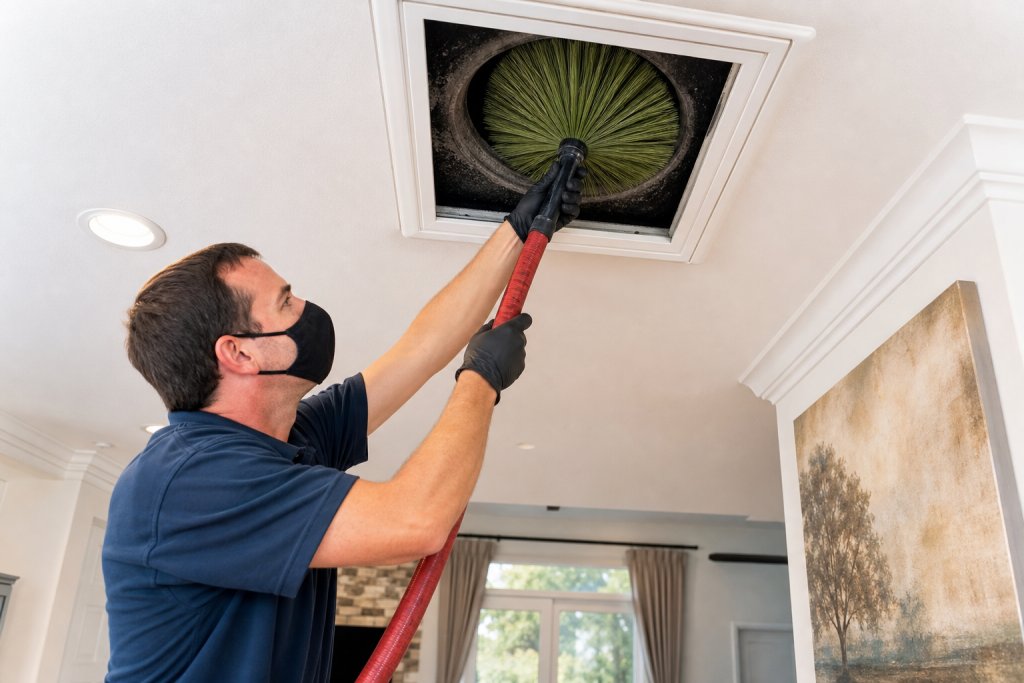
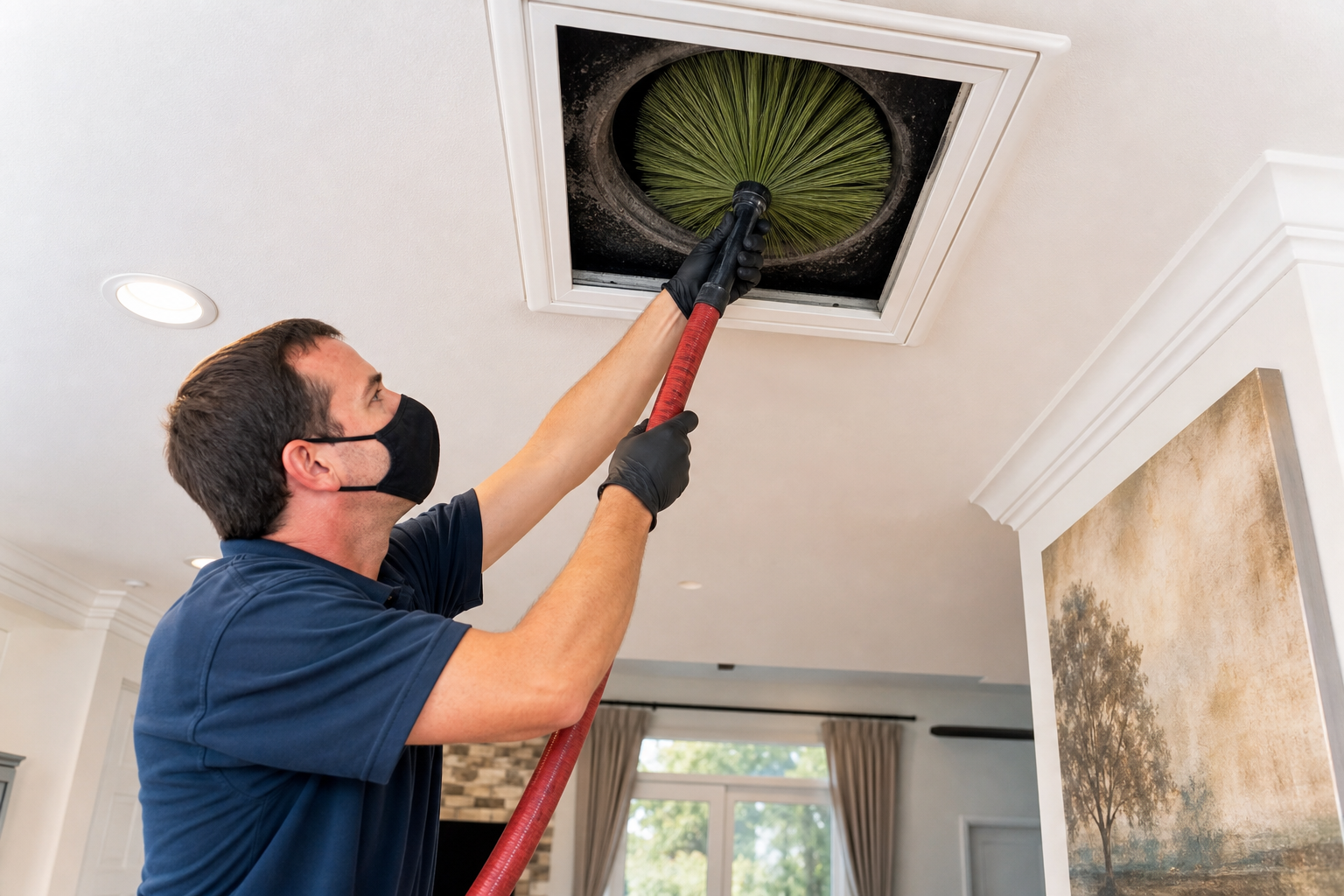
Rotobrush is a portable, truck-mounted or cart-based rotary brush system. A flexible cable feeds a cylindrical brush head through the ductwork while a vacuum collar at the entry point collects dislodged debris. The brush spins at controlled speed, physically scrubbing the interior surface—hence “contact agitation.”
This differs fundamentally from two other common methods:
- Compressed-air whip systems: Use pneumatic whips or skipper balls that blast debris loose with high-pressure air pulses. No physical scrubbing—just impact and airflow.
- Negative-air/HEPA vacuum methods: Create suction throughout the duct system, often with manual agitation at vents, but without a traveling brush head making wall contact.
Each method has legitimate applications. The problem in Houston’s market is that equipment ownership drives recommendations, not duct biology. A contractor who invested $15,000 in a Rotobrush fleet will find reasons to use it. We carry multiple systems—including Rotobrush, Nikro HEPA vacuums, and Abatement Technologies equipment—specifically so we can match the tool to the job, not the other way around.
In our experience, the Rotobrush earns its keep when debris is adhered to the duct wall rather than simply resting in the bottom. Houston’s humidity creates that adhesion: dust combines with moisture, compacts over years, and becomes almost tar-like in flex-duct liner folds.
Which Duct Materials Work Best With Rotobrush
Not all ductwork tolerates contact brushing. Here’s where we reach for the Rotobrush—and where we deliberately leave it on the truck:
Ideal candidates:
- Flexible duct (flex-duct): Common in Houston homes built 1985–2010, especially in suburbs like Alief, Katy, and Sugar Land. The spiral-wire frame with fiberglass liner traps debris in the corrugated interior. Rotobrush bristles follow the contours and physically lift compacted material.
- Fiberglass-lined metal duct: Found in many Houston townhomes and mid-rise buildings. The porous liner holds debris; air-whip methods can damage the liner, while Rotobrush provides controlled, directional agitation.
- Light to moderate residential buildup: Where debris is compacted but not hardened into concrete-like deposits requiring more aggressive remediation.
Poor candidates:
- Unlined sheet metal in poor condition: Rust, corrosion, or thin gauge metal can be scratched or perforated by brush contact.
- Asbestos-containing duct wrap: Disturbing ACM requires abatement protocols; brushing is prohibited. Pre-1980 Houston homes need testing first.
- Collapsed or damaged flex-duct: The brush will snag and worsen the damage. Repair comes before cleaning.
- Heavy mold contamination: Rotobrush spreads spores physically through contact. Remediation-grade HEPA containment and antimicrobial application—not brushing—are required.
We pulled a job in a garage over in Sharpstown last month where the previous company had run a Rotobrush through collapsed flex-duct, tearing three separate runs. The homeowner paid for “cleaning” and got $1,200 in damage. The tool wasn’t the problem; the diagnosis was.
Why Houston’s Climate Makes Rotobrush Especially Relevant
Houston’s combination of high humidity, long cooling seasons, and pollen-heavy springs creates a specific debris profile we don’t see in drier climates. Here’s what two decades of local work has taught us:
Our cooling-dominated HVAC systems run 8–10 months annually, pulling humid outdoor air through return ducts. Dust settles, moisture adheres it to duct walls, and the cycle repeats. By year five in a typical Houston home, flex-duct liner contains layered deposits: pollen base, dust mite debris middle, mold-friendly organic top layer. Compressed-air systems can blow through the loose surface material but often leave the adhered base layer. The Rotobrush’s physical contact breaks that bond.
Neighborhoods with older infrastructure see this most acutely. In Alief, where many homes were built during the 1970s–1990s flex-duct boom, we’ve opened systems with 40% airflow restriction from compacted liner debris. In newer Energy Corridor builds with tighter ductwork, the problem’s less severe but still present—especially where builders used minimum-spec flex-duct to cut costs.
Houston’s spring oak pollen season (typically February–April) adds another variable. Fresh pollen layers over older buildup; air-whip methods can create “mud” inside ducts when moisture’s present. The Rotobrush’s simultaneous vacuum collection at the contact point reduces this re-wetting risk.
How to Vet a Contractor’s Rotobrush Recommendation
Most Houston duct cleaning quotes happen over the phone with zero system inspection. That’s your first red flag. Here’s what to ask:
- “What duct material do I have, and did you verify that visually?” If they haven’t looked—or won’t—they’re guessing at tool selection.
- “Under what conditions would you NOT use Rotobrush on my system?” An honest contractor has a clear answer. “Never” or “we always use it” are both wrong.
- “What other equipment do you carry if Rotobrush isn’t appropriate?” Single-tool operators have incentive bias. We run Rotobrush, Nikro HEPA systems, and Abatement Technologies remediation gear specifically to avoid this.
- “Will you show me before/after footage?” Camera verification is standard for owner-led operations. We document every Houston job; franchise crews often skip this.
Scott Gray personally inspects every system before tool selection. That’s not a marketing line—it’s the only way to avoid the Sharpstown scenario. Two decades of hands-on experience means recognizing duct conditions in seconds that phone-quote operations miss entirely.
When to call a pro: If your Houston home has flex-duct over 15 years old, visible mold at vents, or airflow that’s dropped noticeably, DIY assessment won’t cut it. We offer free inspections with camera documentation—no charge, no pressure to book. Call (855) 683-5929.
Related services in Houston: For homes in Alief and surrounding areas, we also provide Air Duct Cleaning in Alief, Dryer Vent Cleaning in Alief, and HVAC Cleaning in Alief—all owner-led, every job.
Scott’s Honest Take: When We Use Rotobrush and When We Don’t
I’ll be direct: the Rotobrush is about 40% of our Houston residential work, not 100%. Here’s the actual breakdown from our field records:
- Rotobrush primary: Flex-duct homes 10–30 years old with compacted liner debris, especially in humidity-exposed attics. Also fiberglass-lined commercial returns in Houston medical and retail buildings where we need controlled agitation near sensitive equipment.
- Rotobrush secondary (combined with HEPA vacuum): Heavy residential buildup where we pre-agitate with brush, then extract with Nikro negative-air for complete collection.
- Rotobrush not used: Unlined galvanized systems, any suspected ACM, collapsed duct requiring repair first, and mold remediation jobs where spore containment trumps mechanical agitation.
The 433 customers who’ve left us a 4.9-star average rating didn’t get there from equipment worship. They got there because we diagnosed before we treated. I’ve walked away from jobs where a competitor had already quoted Rotobrush work because the ductwork couldn’t tolerate it. That’s not noble—it’s competent. Houston’s too hot and too humid to get duct cleaning wrong; a damaged system costs more than the cleaning ever would have.
One more thing: Rotobrush marketing emphasizes “deep cleaning” with brush contact. That’s true when appropriate. But “deep” can become “destructive” with the wrong duct type or an inexperienced operator running excessive brush speed. Our units have variable speed control for a reason—we match aggression to material, not maximum RPM to sales pitch.
The Bottom Line
Rotobrush air duct cleaning is the right tool for specific Houston homes—primarily flex-duct and fiberglass-lined systems with compacted, humidity-adhered debris. It’s the wrong tool for damaged ductwork, asbestos-suspect materials, and heavy mold contamination. The question isn’t whether your contractor owns a Rotobrush; it’s whether they’ll tell you when not to use it.
Key takeaways:
- Rotobrush is contact-agitation cleaning, fundamentally different from air-whip or vacuum-only methods
- Houston’s humidity makes flex-duct debris adhesion a unique local problem that contact brushing solves well
- Always verify duct material before accepting any tool recommendation
- Camera inspection and variable-speed brush control separate competent operators from equipment renters
- Owner-led assessment prevents the “wrong tool, wrong duct” damage we see weekly
If you’re in Houston and need an honest evaluation of whether Rotobrush suits your system, Lone Star Air Duct Cleaning Service Houston offers free, camera-documented inspections. No phone-quote guesswork. Owner Scott Gray assesses every job personally. Call (855) 683-5929.
Frequently Asked Questions
Rotobrush air duct cleaning in Houston typically runs $300–$600 for a standard residential system with 10–15 vents, depending on duct accessibility, contamination level, and whether additional services like dryer vent cleaning or sanitizing are included. Larger homes in neighborhoods like Memorial or The Woodlands may reach $700–$900. We provide exact quotes after free inspection—call (855) 683-5929 to schedule.
No. Rotobrush cleaning is safe for flex-duct and fiberglass-lined metal ductwork but can damage unlined sheet metal with corrosion, collapsed flex-duct, or asbestos-containing materials. A visual inspection by an experienced technician is mandatory before brush contact. If a contractor won’t inspect first, that’s a warning sign. We assess every Houston system before selecting any tool.
Rotobrush provides direct physical contact agitation through a spinning brush, which excels at removing debris adhered to duct walls—common in Houston’s humid climate. Compressed-air systems use pneumatic whips or high-pressure pulses that work well for loose debris in smooth metal duct but may leave compacted material behind. The best contractors carry both and select based on your specific duct type and contamination profile.
Rotobrush alone does not remove mold effectively and can spread spores through physical contact. Mold remediation requires HEPA containment, antimicrobial application, and often removal of contaminated porous materials. If you suspect mold in your Houston ductwork, request a dedicated mold assessment rather than standard cleaning. We use Abatement Technologies remediation protocols for confirmed contamination, not brushing.
Written by Scott Gray, Owner & Lead Technician at Lone Star Air Duct Cleaning Service Houston, serving Houston since 2006.
Need Air Duct Cleaning Help?
Call Lone Star Air Duct Cleaning Service Houston — licensed & insured, here with fast after-hours help in Houston.
(855) 683-5929